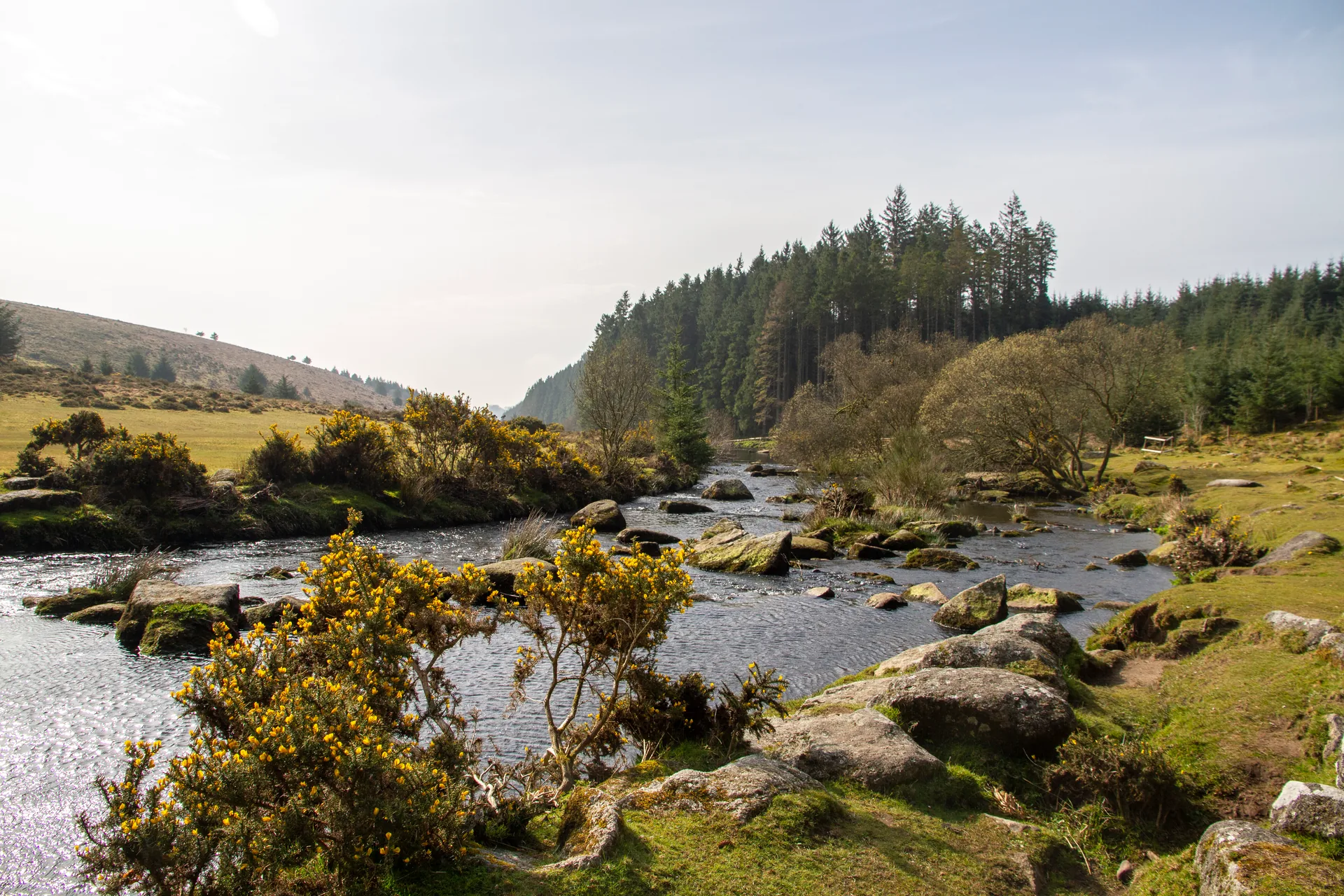
Dartmoor’s rivers, and wetlands are among some of the National Parks most important habitats.
They support a rich variety of wildlife and provide benefits for people, nature and the landscape. From upland rivers to peat bogs these areas of Dartmoor help store water, reduce flood risk, and support rare species.
Rivers
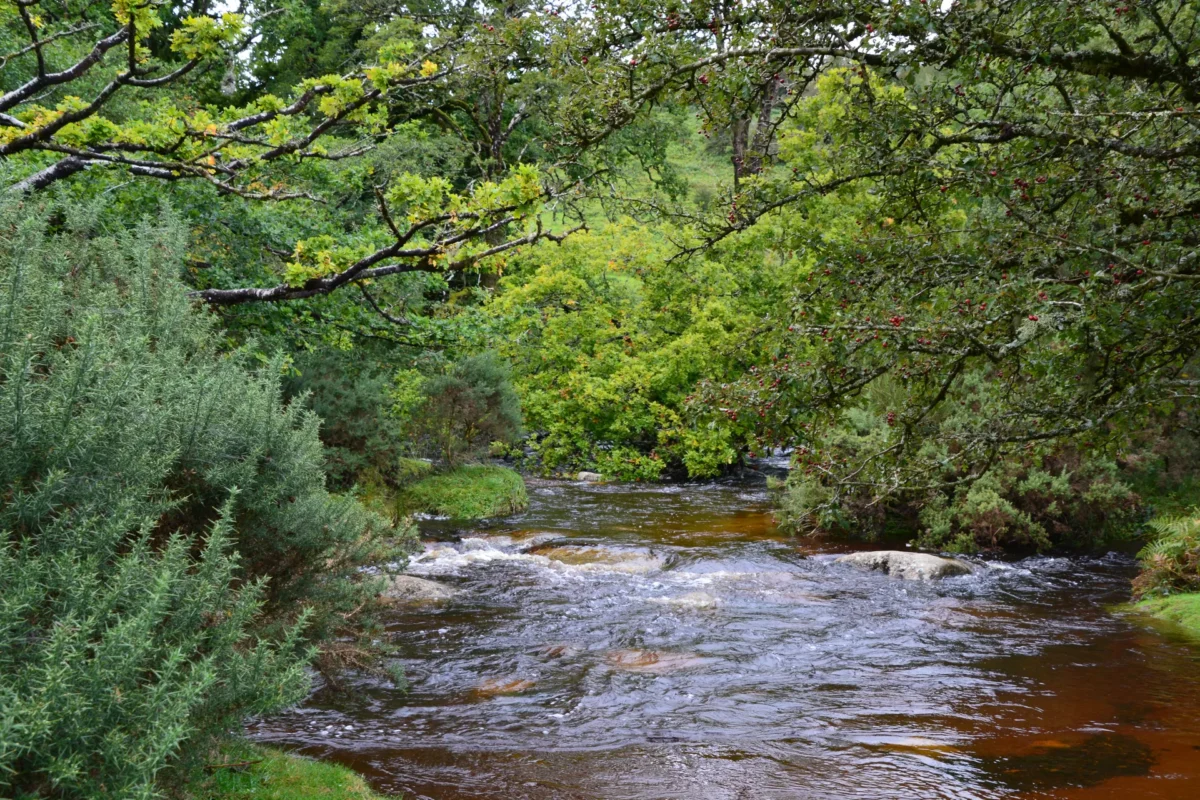
Many rivers arise on Dartmoor including the East and West Okement, Taw, Teign, Bovey, Dart, Avon, Yealm, Erme, Plym, Walkham, Tavy and Lyd.
These rivers and streams are characterised by fast-flowing waters that rise rapidly in response to rainfall. Their banks are often covered in mosses and ferns.

River wildlife
Dartmoor’s rivers and streams are home to migrating salmon and sea trout, while dippers and grey wagtails are commonly seen along fast-flowing water. Kingfishers and goosander can be found in lower valleys, while the rivers have become a stronghold for otters.
Wetlands
From peat bogs and valley mires to marshes and wet heath, Dartmoor’s wetlands are rich in wildlife and play a vital role in the health of the National Park.
They provide a habitat for rare plants and animals, help store carbon, improve water quality and hold water in the landscape, reducing the risk of flooding downstream.
Blanket bog and raised bog
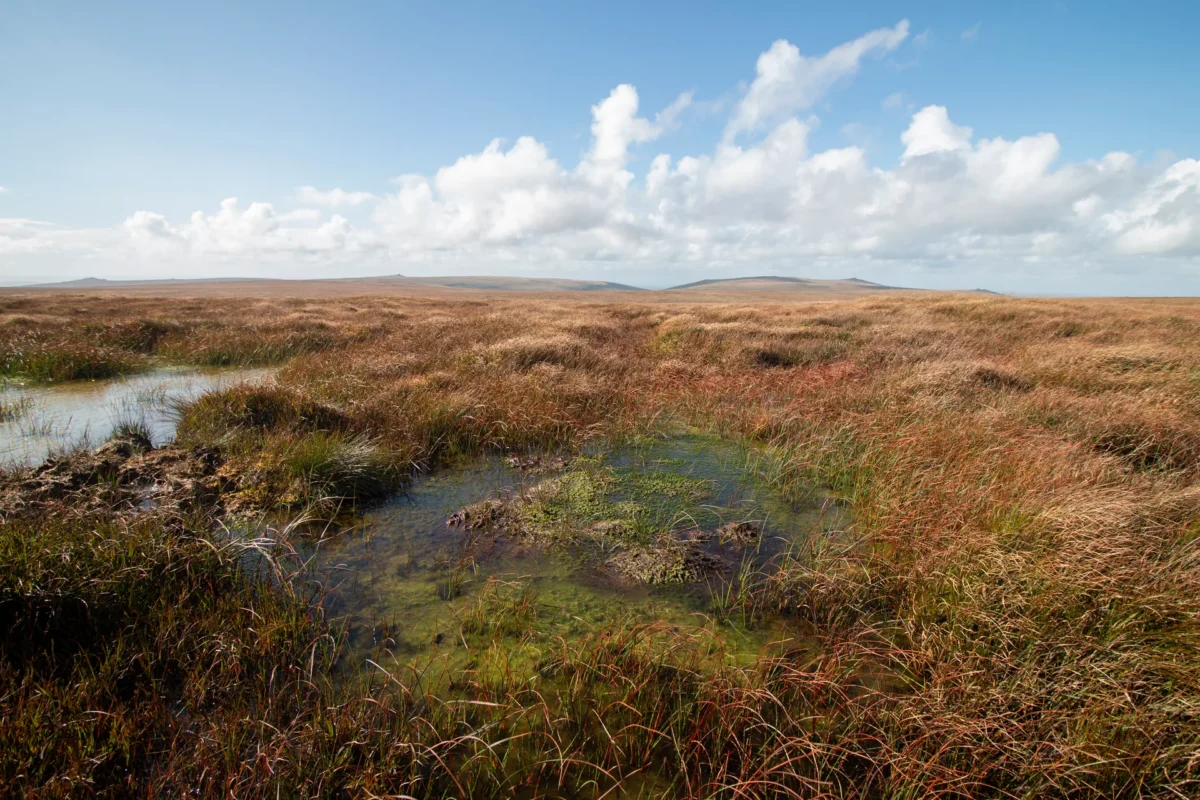
Blanket bogs are deep peat habitats that cover the higher, gently sloping areas of Dartmoor, mainly above 400 metres. Around 8,500 hectares stretch across the heart of the moor, centred on Cranmere Pool in the north and Naker’s Hill in the south.
Dartmoor is also home to Tor Royal Bog, the only raised bog in Devon and Cornwall, where peat has built up into a distinctive dome. Both blanket bogs and raised bogs are internationally rare and specially protected.
These remarkable landscapes support plants such as deer grass, hare’s-tail cotton grass, cross-leaved heath, bog asphodel and sundews, alongside colourful carpets of bog mosses. Crowberry, a rare moorland plant, is also found in a few locations.
Blanket bogs provide important habitat for breeding golden plover and dunlin, while larger numbers of golden plover gather on Dartmoor during winter.
Most of Dartmoor’s bogs are protected within the North Dartmoor, South Dartmoor and East Dartmoor Sites of Special Scientific Interest (SSSIs), as well as the Dartmoor Special Area of Conservation (SAC).
Valley mire
Valley mires are waterlogged peat wetlands found at the bottom of valleys, natural hollows and former tin workings. Dartmoor’s valley mires are internationally important and support some of the UK’s rarest wetland plants.
Their colourful plant communities include cotton-grass, bog asphodel, bog-bean, sundews, pale butterwort and marsh St John’s-wort. Rare species include the bog orchid, which is threatened across Europe, Irish lady’s tresses, found in only one site in England on Dartmoor, and the great sundew.
These wetlands are also important for wildlife, providing habitat for snipe, curlew, frogs and dragonflies. Dartmoor is nationally important for the keeled skimmer dragonfly and supports rare species including the southern damselfly. Curlew and lapwing, both declining birds, still breed in a small number of valley mires.
Many of Dartmoor’s best examples are protected within Sites of Special Scientific Interest (SSSIs), particularly on North, South and East Dartmoor. Blackslade Mire and Whitchurch Down are recognised for their outstanding mire habitats.
Valley mires are sensitive environments. Threats include water abstraction, pollution from agricultural nutrients, acid rain, and disturbance to nesting birds by people and dogs.
Rhos pasture
Rhôs pastures are enclosed species-rich purple moor-grass and rush pastures. On Dartmoor they are found in valley systems away from the open moor, usually in a mosaic together with wet woodland, other species-rich grasslands and oakwood. Dartmoor has 1,200 hectares of this habitat, representing 20% of the English resource.