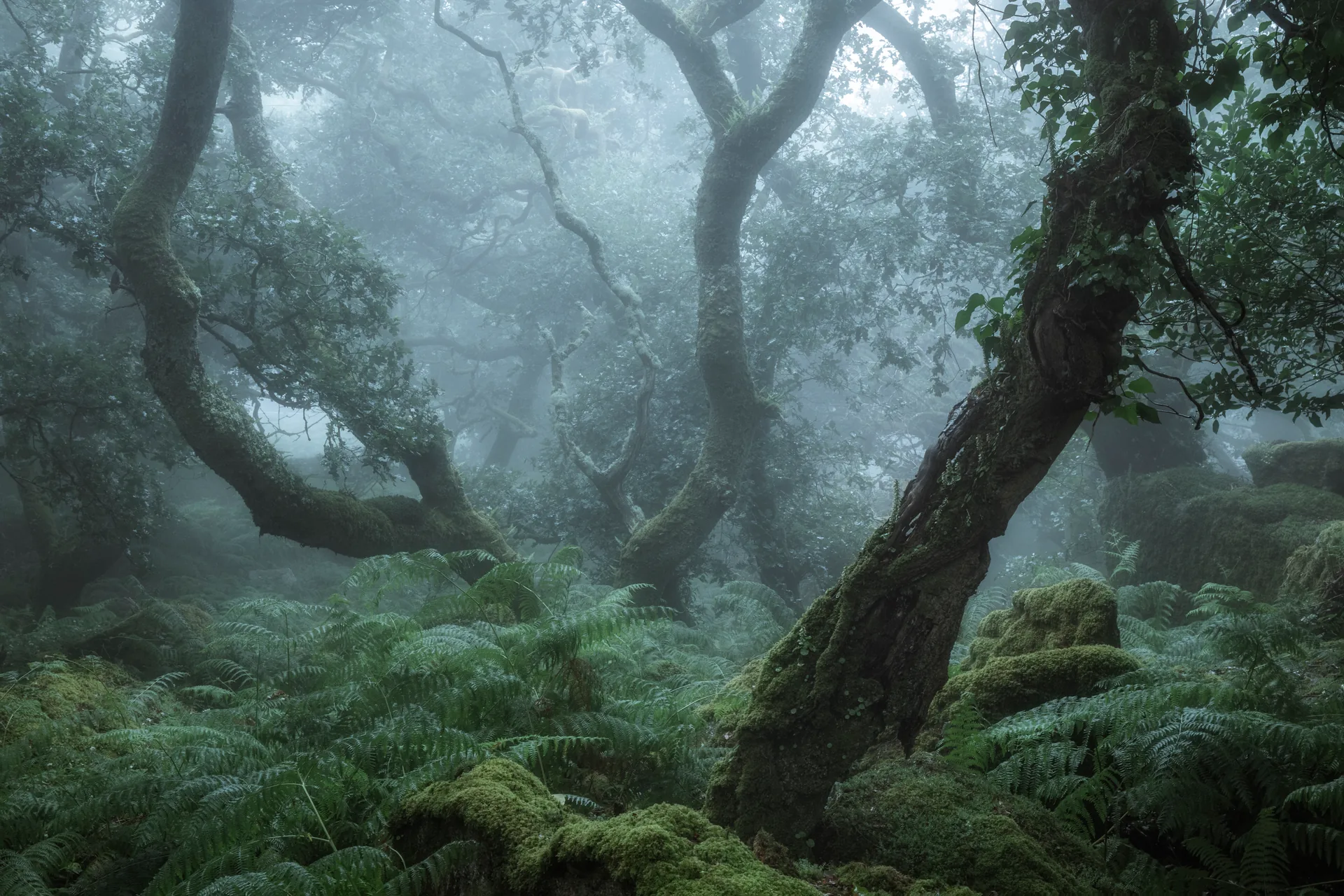
Dartmoor National Park has a diverse range of woodlands.
Many have remained wooded since at least the 1600s and are known as ancient woodlands. From wet woodlands and orchards to large forestry plantations and upland oakwoods, these habitats support rare lichens, a variety of birds and other wildlife.
Upland oakwood
Upland Oakwood is one of Dartmoor’s most important habitats and makes up much of Dartmoor’s woodlands.
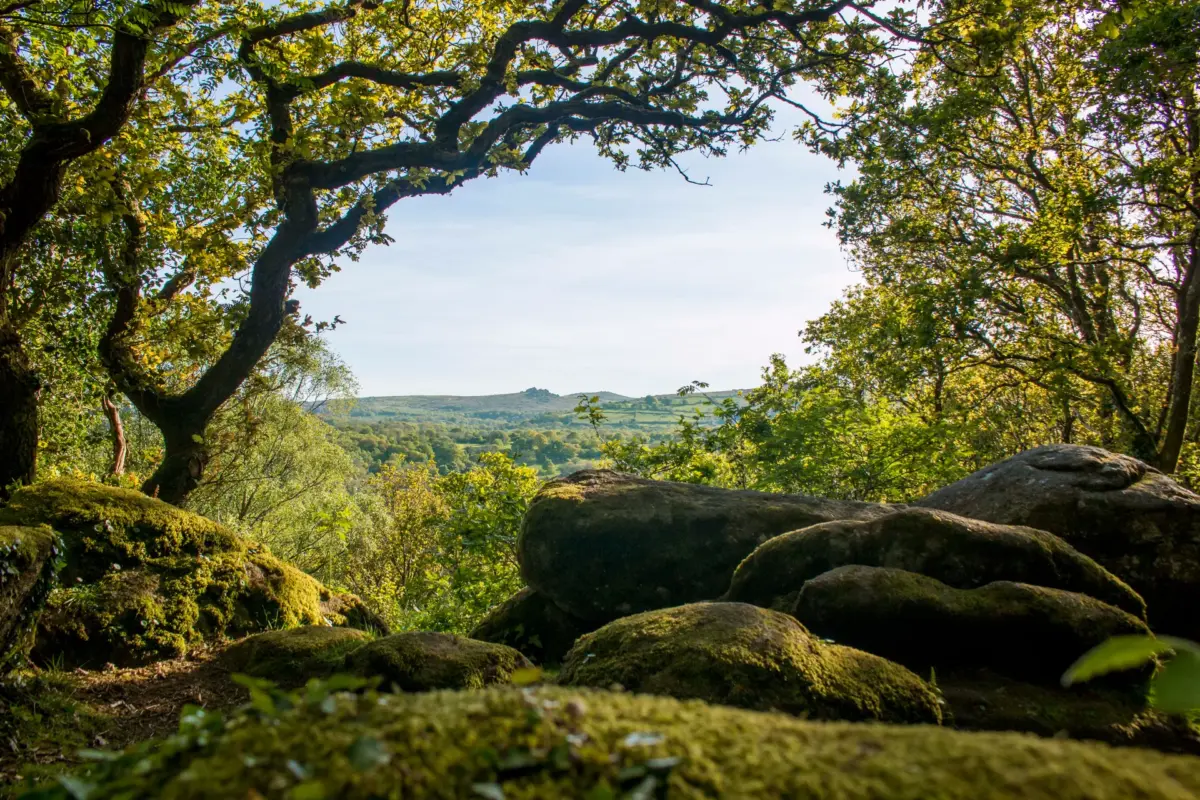
These internationally significant woods are dominated by oak trees and are home to a variety of plants, mosses, ferns and lichens. Dartmoor’s oakwoods are transformed each spring by a carpet of bluebells.
-
Ancient oakwoods
Many of Dartmoor’s oakwoods are ancient, having existed for hundreds of years. Alongside oak, these woodlands support birch, rowan, hazel, and holly, creating a diverse habitat for wildlife.
-
Rich in wildlife
The Upland Oakwood on Dartmoor supports a wealth of wildlife, including pied flycatchers, restarts, wood warblers, buzzards, dormice and a variety of butterflies and rare invertebrates including the blue ground beetle.
-
Protected sites
Many of these sites are protected as National Nature Reserves, Sites of Special Scientific Interest, and part of the South Devon Woods Special Area of Conservation.
Wistman’s Wood
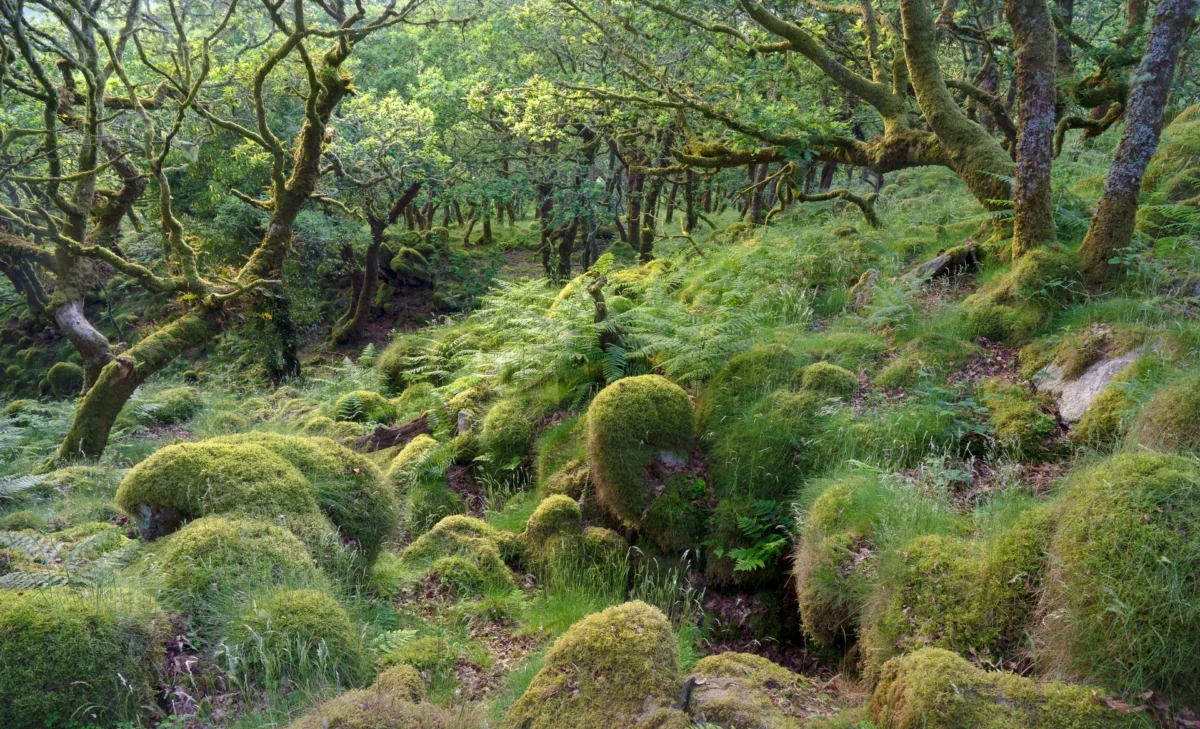
Wistman’s Wood is an upland oak woodland and National Nature Reserve, forming part of Dartmoor’s temperate rainforest. It is an important habitat for fragile mosses and lichens.
The wood is home to the exceptionally rare horsehair lichen, found at only two sites in Britain. This precious woodland is vulnerable, and we all have a part to play in protecting it.
Visiting the area
-
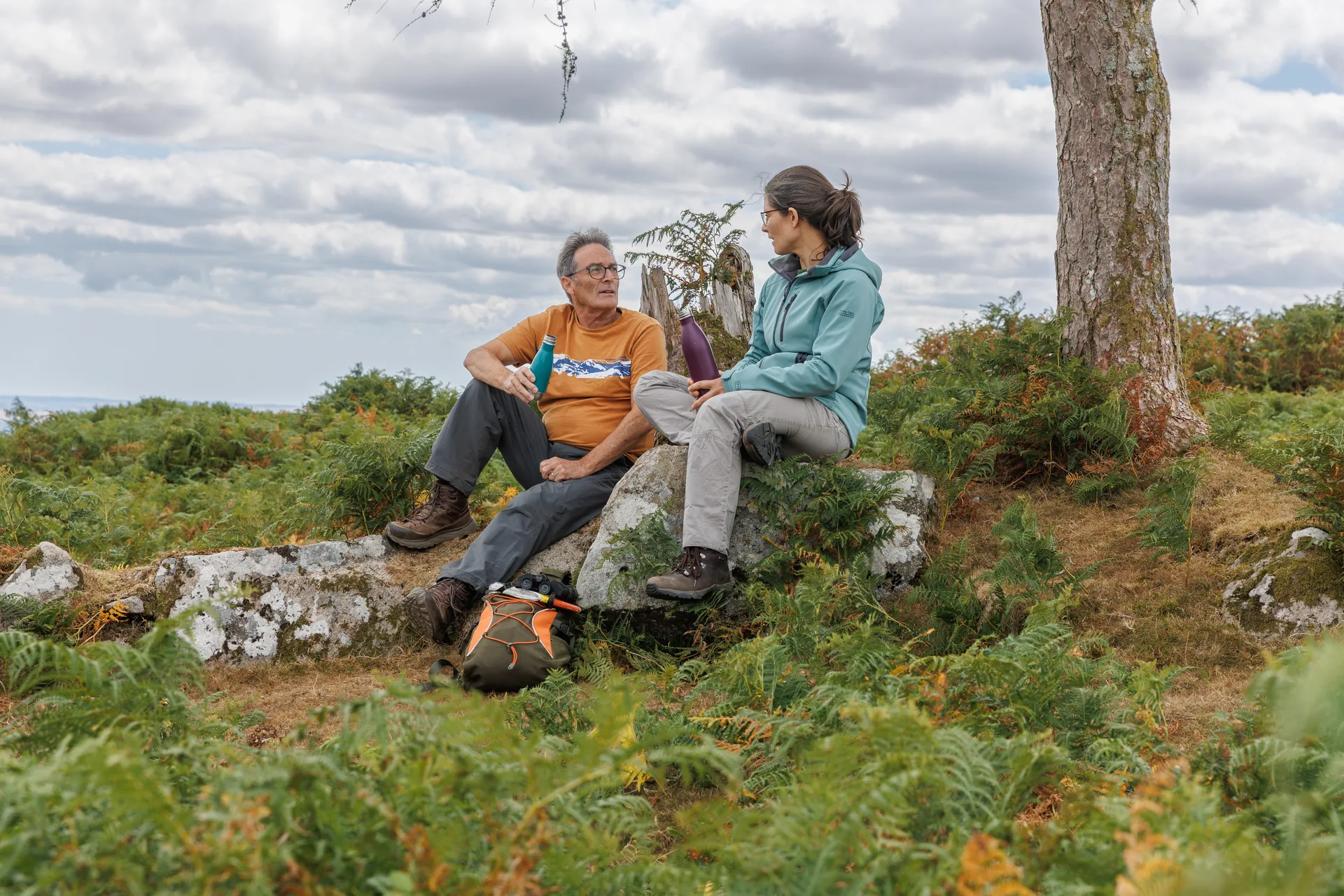
Please follow the signs and guidance and walk the trail around the woods.
-
A small car park for visitors is available opposite Two Bridges Hotel. Spaces are very limited and best avoided at busy times. Access is required at all times so please keep to the designated area and do not park across gateways or along the road.
-
Once on the trail, an easy access viewing area provides great views to the West Dart Valley towards Wistman’s Wood, allowing more people better access to these iconic views.
-
Wistman’s Wood is owned by the Duchy of Cornwall and managed by Natural England. It is designated as a Site of Special Scientific Interest.
Wet woods
Wet woodlands thrive on waterlogged ground and are often found alongside Dartmoor’s oakwoods and Rhôs pastures in sheltered valleys.
Willow and alder are the main trees found in this environment, but birch and ash are also common. The woodland floor supports marsh marigold, marsh violet, golden saxifrage, sedges, ferns and bog mosses. Royal fern, one of Dartmoor’s most striking plants, is also frequently found in these damp habitats and along riverbanks.
Older willow woods are rich in lichens, including rare lungwort species that can only survive in very clean air, making them important indicators of a healthy environment.
These woodlands provide a home for birds such as redpoll, siskin, willow tit and wintering woodcock.
Notable examples include the willow carr at Sampford Spiney, the extensive alder woodland at Becka Falls in the Bovey Valley, and the alder woodland at Yarner Wood National Nature Reserve. Sampford Spiney and Shaugh Prior Woods are particularly important for their rare lichen communities.
Veteran trees
The old, gnarled veteran trees found around the moor are special features of the Dartmoor landscape. These trees are an important part of our heritage, have been around for many hundreds of years and are a direct link with our past. The trees are special not just because of their age but for their rarity. Britain is considered to have the largest and best array of ancient trees in north-western Europe.
Veteran trees can be found in many places but mostly where there is evidence of long human activity such as along old field boundaries, ancient deer parks, wood pasture, wooded commons, village greens and old churchyards.
The most famous ancient tree on Dartmoor is the Meavy Oak standing on the village green. In the early 1900s the tree was propped to stop it falling over. Over time the crown has been reduced and the props removed. The tree is hollow and is difficult to date exactly, but estimating its age from the stem measurement suggests the tree is over 950 years old.
Orchards
Orchards were once a common feature across lowland Dartmoor. In 1960 there were some 780 orchards within the National Park, but by 2000 over 320 of these orchards had been lost completely.
Most orchards were apple orchards planted to produce rough cider or ‘scrumpy’ with many farmsteads having their own cider press. Scrumpy is still a popular drink locally, but there are no commercial producers on Dartmoor.
Very few orchards are still being managed today. However, one of the exceptions is Lustleigh community orchard, the site of annual May Day celebrations.